Covered lath and fascia curtain hardware

What Is A Covered Lath And Fascia, And Is It Right For My Curtains?

Reading time: 5 minutes

If your curtain designer has mentioned a covered lath and fascia, you might be wondering what on earth they are talking about. You are not alone. This curtain hardware solution is one of the most useful but least understood parts of a bespoke curtain installation, and knowing what it is and how it works will help you understand why your designer has recommended it.

Understanding The Covered Lath And Fascia

This article explains exactly what a covered lath and fascia is, why it matters, and how to decide whether it is the right choice for your window. By the end, you will feel confident discussing it with your designer and clear on whether it is the right solution for your home.

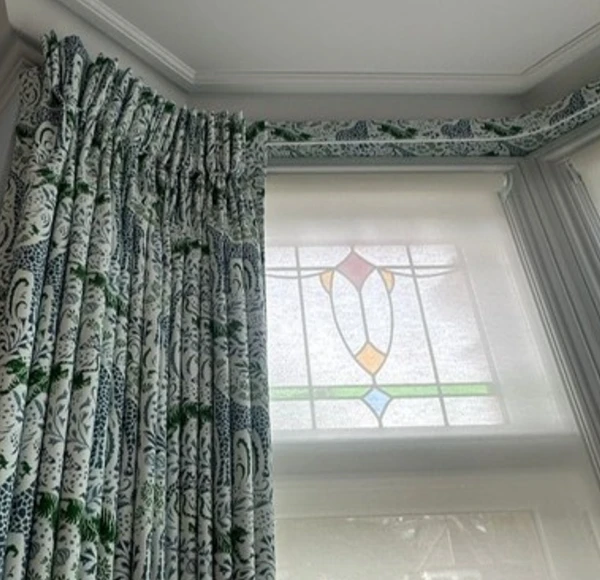
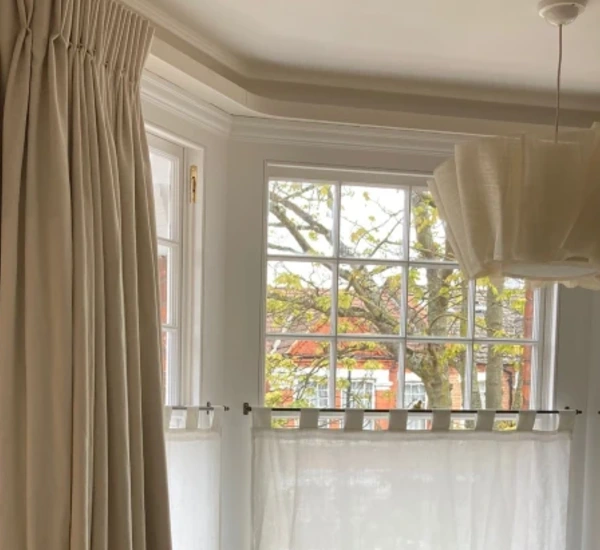
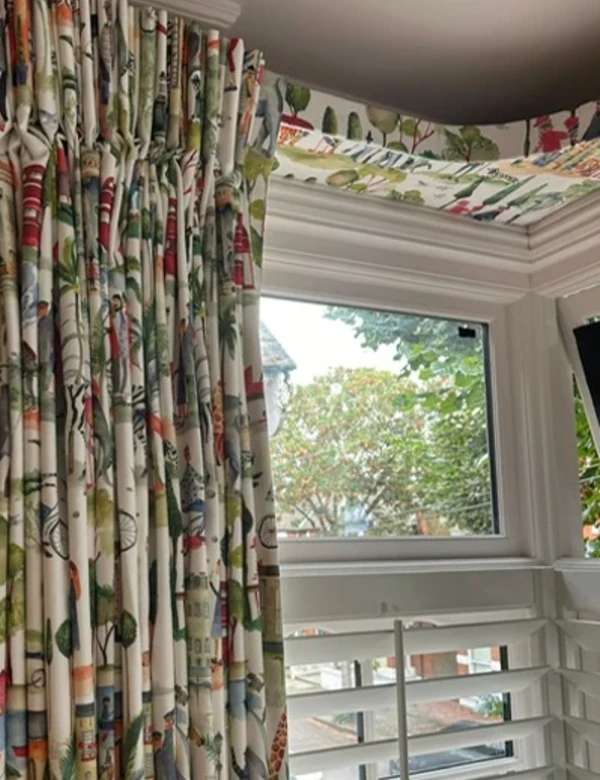
A covered lath and fascia is a bespoke minimalist curtain hardware solution that hides a curtain track behind a small fabric-covered fascia. They are perfect for:

  • Hiding curtain tracks for a clean, uncluttered finish
  • Reducing light leakage in bedrooms
  • Creating a minimalist look that fully shows off the curtain heading
  • Fitting around tricky windows without spoiling their beautiful detailing

What is a lath?

The lath is made from timber and is either attached to the ceiling, the wall, or can sit on top of the window frame.

The projection is perfectly tailored to clear any obstacles around the window, such as a deep window sill, frame, or radiator. The curtain track is top-fixed to the underside of the lath and a slim 5cm flexible fascia is fitted to the front of the lath to perfectly conceal the track.

What is a fascia?

The fascia is simply a narrow, flat facing board — think of it as the decorative front panel that covers the mechanics and gives the whole installation its clean, finished appearance

The lath and fascia are either covered in the same fabric as the curtains or in a contrast or plain neutral fabric.

The curtains sit in front of the lath, showing off the full beauty of the curtain heading, offering a sleek, contemporary alternative to a traditional pelmet, which hides the heading and can reduce light from the window. When the curtains are closed, the lath and fascia simply disappear behind the curtains.
I Want A Corded Track But I Don’t Want To See The Hardware. Is A Covered Lath And Fascia The Answer?

Quick Answer: Yes. A covered lath and fascia is the ideal solution when you want the convenience of a corded track without wanting the track itself on show.

Corded tracks can be bulkier than hand-drawn tracks, and while they look acceptable ceiling-fixed, face-fixing them above a window can spoil the overall look. In this instance, a covered lath and fascia is perfect, particularly where there is not enough space for a pelmet or where a pelmet would overpower the window detailing.

Corded curtain tracks are a sensible choice for hard-to-reach windows, bay windows with bends, and bedroom curtains where an overlap arm significantly improves blackout.

Will A Covered Lath And Fascia Work On A Tricky Bay Window?

Quick Answer: In most cases, yes. A covered lath and fascia is often the solution that works where other hardware options, such as poles, simply cannot.

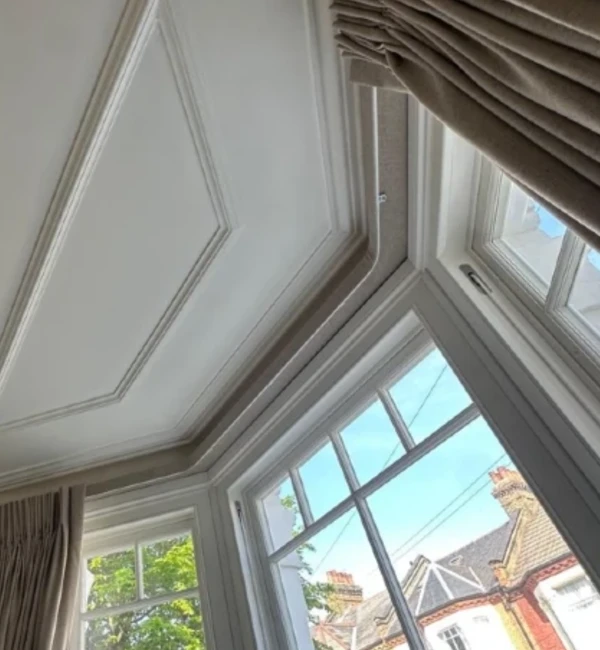
Large bay windows benefit from the convenience of a corded track, especially where furniture in the window makes access difficult. Bay windows come in all shapes and sizes, and however tricky the configuration, a covered lath and fascia can often work where other options would not.

We see many bay windows with minimal space between the window frame and the cornice, which makes a pole impossible as there is no room for the brackets. A covered lath and fascia can slot into this tight space, with smaller hidden brackets giving a really neat and stylish finish where the curtains appear to drop straight from the cornice or ceiling.

The lath is bespoke-made on site to fit the window, making it highly versatile. It can have a deeper board in the centre, for example to clear a radiator, and shallower boards at the sides to maximise space. Often sitting on top of the window architrave or frame, it also provides a very sturdy and stable fixing to hold heavy lined curtains.

Katherine’s Key Takeout: Bay windows are often where clients feel most stuck if a pole won’t fit and they assume there are no good-looking alternatives. A covered lath and fascia is one of the most satisfying solutions to recommend because it solves what feels like an impossible problem and delivers a really beautiful, tailored result.

Can A Covered Lath And Fascia Replace My Old Bulky Pelmet?

Quick Answer: Yes, and the transformation to the room can be dramatic. We regularly see this approach completely open up a window and flood a room with more light.

Unlike a traditional pelmet, a covered lath and fascia does not obscure any of the beautiful features of a window, whether that is an intricate window frame, a deep architrave, or a stunning cornice.

Is A Covered Lath And Fascia The Best Option For Bedroom Blackout?

Quick Answer: Yes. When ultimate blackout is the priority, a corded track with an overlap arm combined with a covered lath and fascia is the most effective solution available.

According to a YouGov survey, 34% of Britons said installing blackout curtains was one of the steps they took to improve their sleep quality. If you are among them, a covered lath and fascia is the hardware detail that makes that investment work as hard as possible.

The lath prevents light coming over the top of the curtain track, effectively sealing the curtains at the top. The lath is also shaped to allow the curtains to return perfectly into the walls at the sides, resulting in close to complete blackout.

Katherine’s Key Takeout: For clients who really struggle with early morning light, this combination, a corded track with an overlap arm inside a covered lath and fascia, is the closest thing to a complete blackout solution that still looks elegant. It is well worth the additional investment.

Can A Covered Lath And Fascia Accommodate Double Tracks For Sheers And Lined Curtains?

Quick Answer: Yes. The lath depth can be tailored to fit two tracks, even on the most complex bay windows, making it an excellent solution wherever double tracks are needed.

Are There Any Circumstances Where A Covered Lath And Fascia Won’t Work?

Quick Answer: There are a small number of situations where it is not the right choice, and your designer will flag these early.

If there is no clearance between the window and the ceiling, a covered lath and fascia may not be possible.

For small windows or short curtains, it may also look out of proportion, and a lighter curtain pole may be the better choice.

It is also important to note that motorised tracks are not compatible with covered laths and fascias because of friction. If you are wanting a motorised track, a pelmet will be the answer instead.

Why Has My Designer Recommended This For My Curtains?

Quick Answer: Your designer has almost certainly recommended a covered lath and fascia because they want your curtains to look their absolute best, and because this method solves a specific problem with your windows or the look you are trying to achieve.

There are several situations where a covered lath and fascia is the right solution:

  • You want a formal, tailored finish without a visible pole or track
  • The top of the window needs to be tidied up, perhaps because of limited wall space, an awkward reveal, or a difficult fixing situation
  • You need blackout performance, and a covered fascia combined with a corded track is one of the most effective ways to prevent light leaking over the top of the curtain
  • Your designer wants the fabric to flow from ceiling or cornice to floor without any hardware interrupting the eye

What Our Clients Say

‘Katherine is an amazing professional. She visited my new apartment, measured and then devoted a lot of time to helping me choose colours and fabrics that would complement the apartment and make it look beautiful. She installed blinds and curtains for me and they look perfect and a lot better than I could have imagined.’ — Philip R

Will A Covered Lath And Fascia Add Much To The Cost Of My Curtains?

Quick Answer: It does add to the overall cost, but the difference it makes to the finished result is usually well worth it.

According to the 2025 Houzz UK Renovation Trends Study, more than half of surveyed homeowners renovated in 2024 and 60% completed decoration projects. For those investing in a full window treatment scheme, a covered lath and fascia is exactly the kind of considered detail that lifts the finished result from good to genuinely special.

The additional cost will depend on whether it is for a straight or bay window and the width of the window. We would always recommend asking your curtain designer to cost up both options, track only and track with covered lath and fascia, as often it does not cost that much more given the improvement to the finished look.

What is worth knowing is that cutting this detail out to save money often means the rest of the investment in beautiful fabric and expert making does not reach its full potential. A covered fascia is one of those finishing touches that completes the picture.

For more on how bespoke curtain and blind costs work, see our guide: What Factors Affect the Price of Bespoke Window Dressings

Katherine’s Key Takeout: A covered lath and fascia is a truly bespoke piece that is built for the window on site by specialist fitters, and the end result is spectacular. It can really enhance even the most awkward window.

Ready To Get Every Detail Right?

If your designer has recommended a covered lath and fascia and you would like to understand more before you commit, get in touch via the website. Katherine is happy to talk through the reasoning behind any recommendation and make sure you feel confident in every decision before your curtains go into production. After all, these are the finishing details that take a beautiful window treatment from lovely to genuinely fabulous.

What Our Clients Say

‘The curtains and blinds we chose with Katherine’s help provided an excellent finish to a huge six-month building project and we couldn’t be happier with the final result.’ — UBM, London

Covered Lath And Fascia FAQ

  • Is a covered lath and fascia the same as a pelmet?

    They are similar but not the same. A pelmet is a more substantial box structure that fully encloses the top of the curtain. A covered fascia is slimmer and sits flat, covering just the front of the lath. Fascias tend to look more contemporary and understated; pelmets are more traditional and formal.

  • Can I have a covered fascia with any type of curtain heading?

    Covered laths and fascias are very versatile, but there are some curtain headings that do not work so well with them. More relaxed headings such as single pinch pleat and pencil pleat tend not to suit a covered lath. They generally look best with more structured headings such as double or triple pinch pleat.

  • What fabric is used to cover the fascia?

    Usually the same fabric as the curtains themselves, which creates a seamless, matching finish. In some schemes a contrast fabric is used deliberately as a design feature.

  • Will a covered lath and fascia help with blackout?

    Yes. When combined with a corded track and good quality blackout lining, a covered fascia is one of the most effective ways to prevent light leaking over the top of the curtain. It is a much better blackout solution than a pole, which always leaves a gap above the curtain.

Get the look


About The Author

Katherine Brown began her career project managing major house renovations, giving her a rare mix of creative design ability and deep technical understanding of construction, hardware, motorisation and installation. For the last decade, Katherine and her team have delivered bespoke window dressings and soft furnishings for homes across London and the UK, including large heritage properties, complex architectural spaces and full-house projects where every room demands a tailored approach.

She works with some of the UK’s most respected interior designers as well as private homeowners, and her work is recognised for its precision, considered detailing and a calm, collaborative design process rooted in trust and craftsmanship.

Katherine Brown