Restoring 30 Years Of Heritage Curtains And Blinds At Serlby Hall

When the owner of a Grade I listed hall in North Nottinghamshire needed help with her curtains, she was not looking for a redesign. She wanted the window dressings she had spent decades enjoying to look fresh again, ready for another three decades.

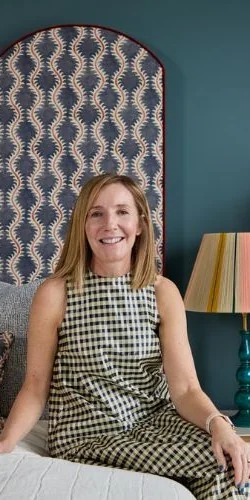
We sat down with Katherine Brown to talk through the Serlby Hall restoration project, following it stage by stage from the first phone call through to installation day.

The Initial Call: When 30-Year-Old Curtains Start Showing Their Age

How trust begins with a referral

This incredible project came through a referral. Katherine and her team had worked on a full house project in London for the owner’s daughter Amy, designing and making curtains, blinds, upholstery and other soft furnishings.
‘We were an integral part of the trusted team on that project,’ Katherine explains. ‘We turned our hands to all her soft furnishing requirements – even banquette seating, upholstery, and reupholstering the cinema room sofa.’
When Amy called to say her mother needed help with her curtains, Katherine had no idea of the scale involved.

Understanding what the client actually wants

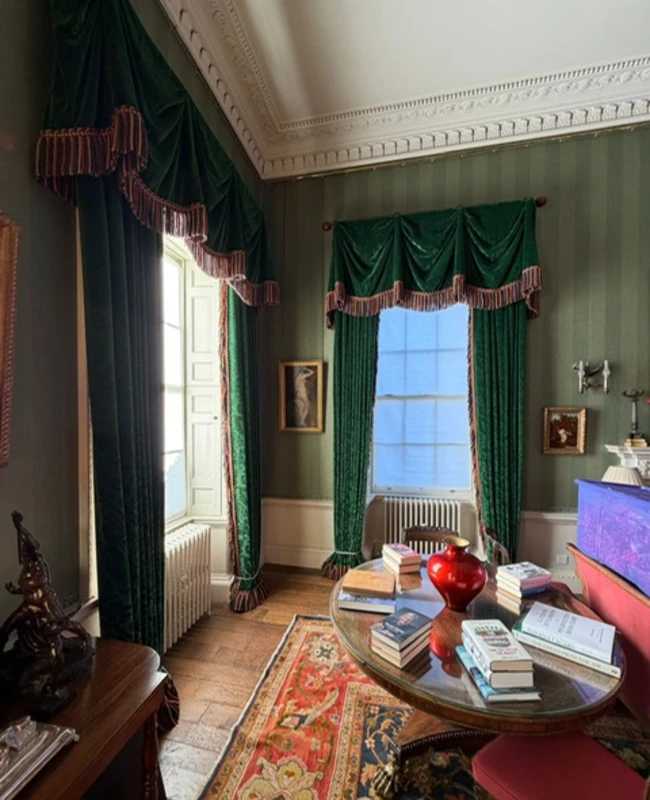
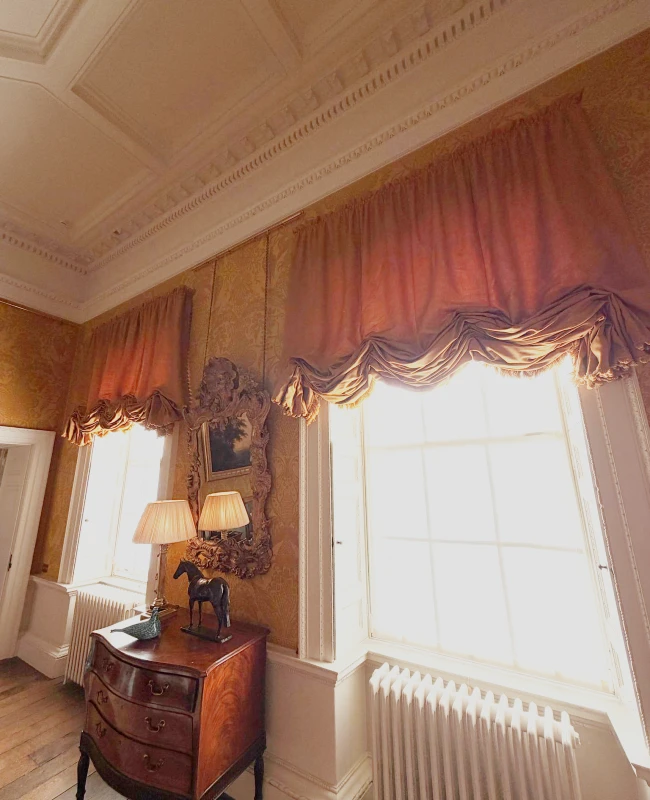
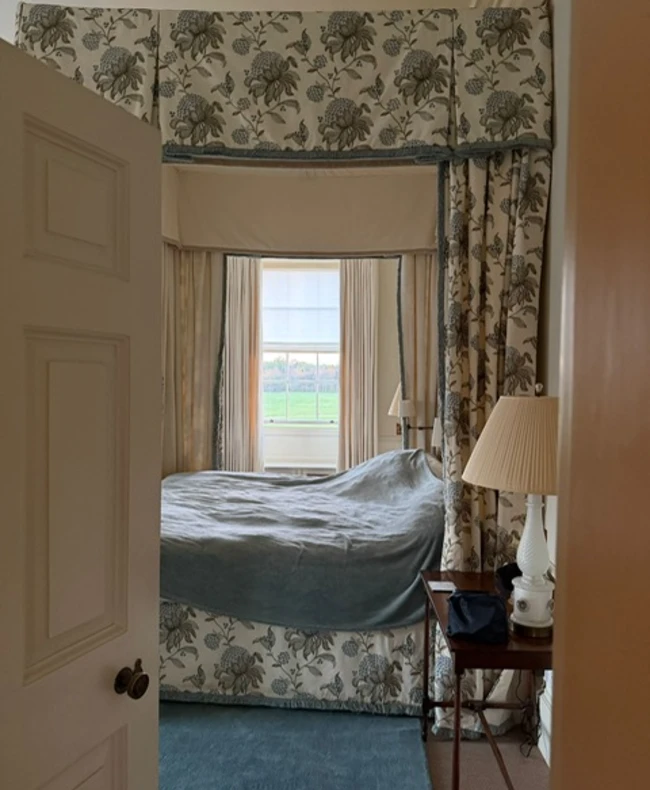
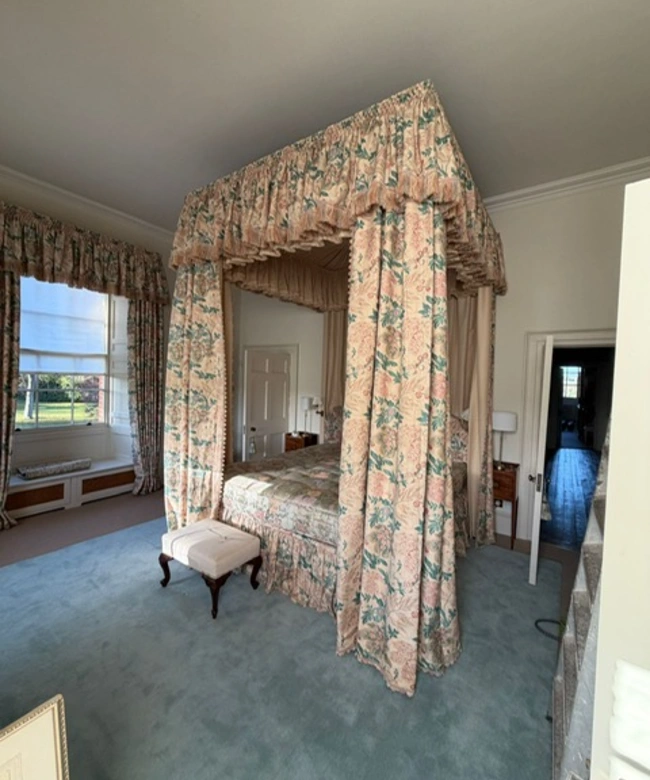
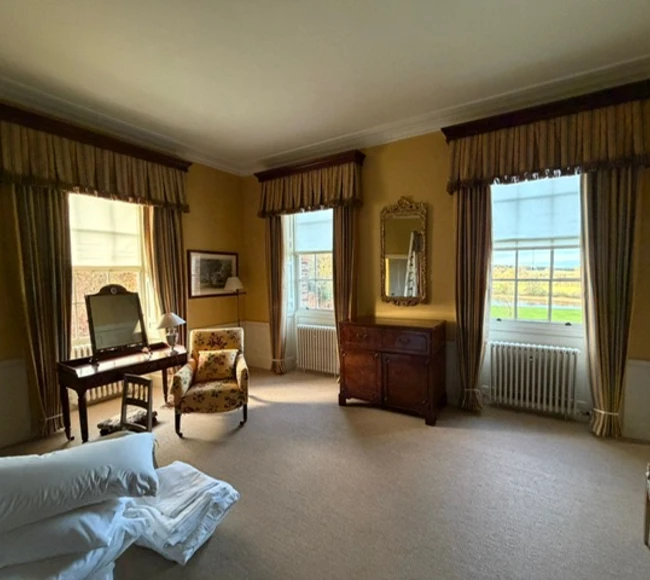
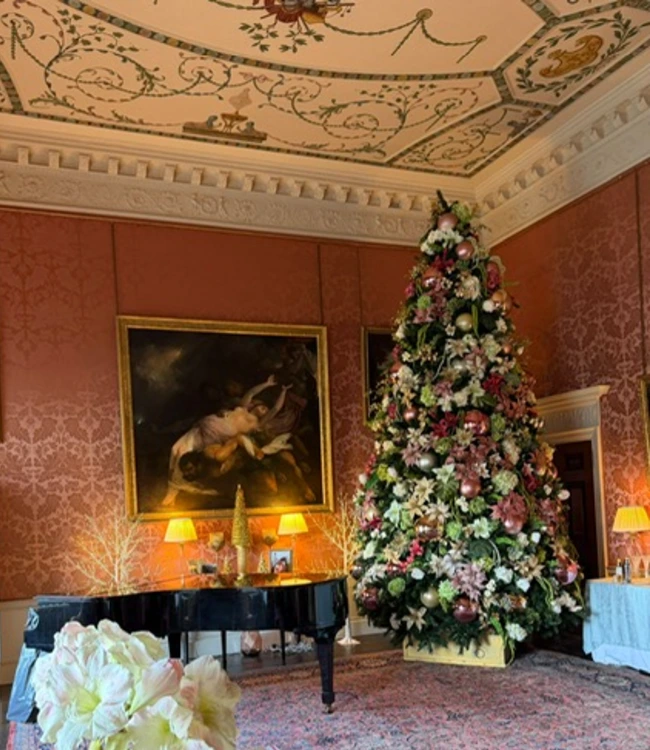
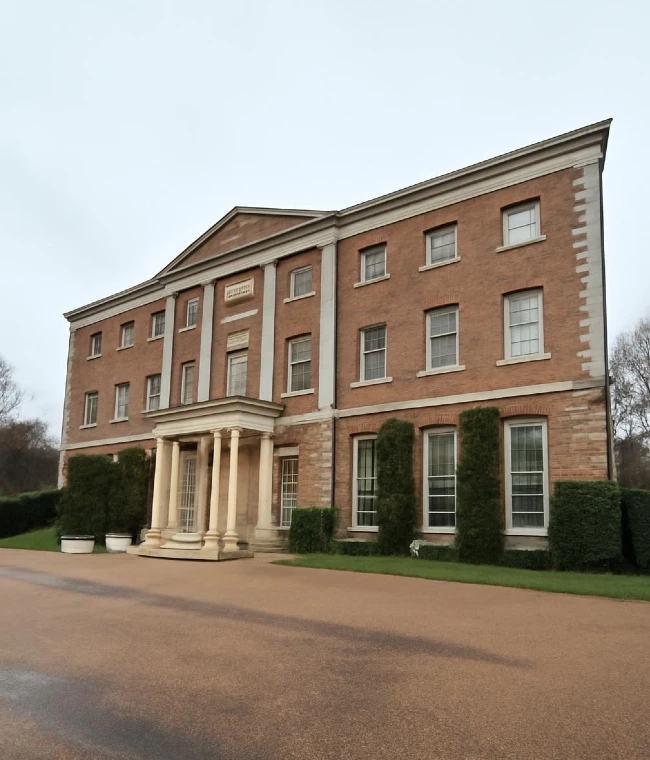
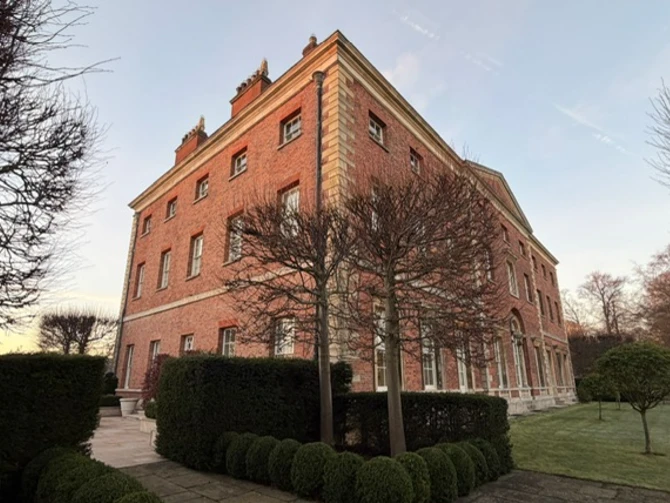
Donna and her husband had bought Serlby Hall decades earlier when it was completely dilapidated. The roof had caved in. It had not been lived in for years. They spent five years restoring it, commissioning painted frescos on the ceilings, silk wall coverings made in Venice, and window dressings featuring traditional techniques: swags and tails, smocked pelmets, four-poster bed canopies and large shaped festoon blinds. All made in traditionally sourced fabrics and trims to beautifully complement the setting of the rooms.

Thirty years on, the curtains are still perfect for the home.

The linings had done their job protecting the fabric but were starting to deteriorate and discolour resulting in faded leading edges, some perished silk and frayed trims.

‘Donna was very clear from the start,’ Katherine recalls. ‘She told me, I don’t want new curtains. I absolutely love them, and they totally fit with the house. I just want them fresh again.’

When curtain replacement is not the answer

The silks matched specially commissioned wall coverings. The colours coordinated with wallpapers no longer in production. The craftsmanship of the curtains was exceptional.
‘What would you put in its place?’ Katherine reflects. ‘When your curtains match silk on the walls that was specially made in Venice, you cannot just order new ones. You would be throwing away part of the fabric of this wonderful hall.’

First Visit: Walking Through 90 Window Dressings Room By Room.

Why we always start with a thorough assessment

Katherine travelled to Doncaster for an initial assessment. She and Donna walked through every room, looking at every window, noting what needed attention.

‘The scale was quite breathtaking,’ Katherine admits. ‘We are talking about 90 windows. Curtains, Austrian blinds, pelmets, four-poster beds, valances.’

At each window, they noted the issues. Some curtains had faded leading edges where sunlight crept past the linings. Some silk had perished and was fraying at the edges. Trims needed repositioning. Linings throughout were weakened and discoloured.

Documenting everything from the start

This first visit established the scope and produced a detailed spreadsheet: every window, every item, every issue identified. Katherine costed it up and sent Donna a proposal.
‘That spreadsheet became the backbone of the whole project,’ Katherine explains. ‘Donna could see exactly what we were proposing to do, item by item, and exactly what it would cost.’

The Planning Meeting: Bringing The Curtain And Blind Experts Together

Our approach: removing risk through communication and planning

Before any work could begin, Katherine needed to address Donna’s biggest concern. She had experienced dry cleaning disasters before. For example items had come back with shinkage. When you are dealing with irreplaceable pieces, that fear is entirely rational.

At Katherine Brown Curtains and Blinds, thorough planning and clear communication are central to how we work. For a project of this complexity, that meant bringing together everyone who would be involved before a single curtain came down.

Katherine proposed a second visit with the whole team present: herself, Sara from production, Tom the head fitter, and the specialist dry cleaning company who would handle the cleaning.

‘It was quite a miracle to get everyone in the hall in Doncaster at the same time, especially at 8.30 a.m,’ Katherine laughs. ‘But when you are taking on a project like this, you need the right expertise from the start.’

Expertise: each team member taking accountability

Lead by Katherine they went through every window again, this time as a team. Working together to do a risk assessment for item. Working out how best to clean each item, how to take down and put back each item and what and how we would alter and restore. We wanted the curtains to go back up looking as if they had never come down.

The dry cleaners assessed which items could be machine cleaned and which needed hand treatment and in the end decided that all items should be cleaned by hand. Tom worked out how each piece would come down and, crucially, how it would go back up. Sara noted details that would matter later: the need for brass curtain pins rather than stainless steel, the exact shade of lining that would look sympathetic rather than glaringly new.

‘Everyone took accountability,’ Katherine explains. ‘Everything was photographed with instructions for refitting before anything came down, then it was all action stations.’

Pricing transparency: knowing exactly what you are paying for

Some items were ruled out during this meeting. The enormous silk festoon blinds that matched the wall coverings? The team agreed they were best left in place. The risk of removing, cleaning and refitting them outweighed the benefit.

‘That came off the quote immediately,’ Katherine says. ‘Donna could see the cost reduce and understand exactly why.’

The spreadsheet showed every element: dry cleaning costs, fabric costs, lining costs, making costs, fitting costs. When something changed, Donna could see precisely what that meant for the price.

‘Not a penny could not be accounted for,’ Katherine emphasises. ‘That transparency matters when you are trusting someone with irreplaceable things.’

For more on how bespoke curtain and blind costs work, see our guide to What Factors Affect the Price of Bespoke Window Dressings.

Removal Day: Protecting Decades Of Craftsmanship

Why the right process matters for delicate curtains and blinds

The dry cleaning company handled the removal, following the detailed plan from the planning meeting. Items were taken down carefully, packaged, and transported to their facility.

‘The labelling was absolutely critical to ensure that items were logged and tracked throughout the process from start to finish’.

Choosing hand cleaning to eliminate risk

The cleaners made a crucial decision: everything would be hand-cleaned rather than put through machines. It cost more and took longer, but it removed the risk of shrinkage entirely.
‘We could not afford to lose even an inch from curtains designed for specific windows,’ Katherine explains. ‘Hand cleaning meant we could guarantee the curtains would return the same size they left.’

Keeping the client informed throughout

Meanwhile, Katherine and Sara kept in constant contact with Donna via WhatsApp (her preferred method). Updates on progress. Questions when decisions were needed. Fabric samples posted when choices arose.

‘We were probably checking in quite a lot,’ Katherine admits. ‘But Donna was always responsive, always gracious about it. I think she actually enjoyed being part of the process. And I think we made her feel comfortable because she knew we were on top of everything.’

curtain restoration project

The Restoration Work: Relining, Repairs And Creative Problem-Solving

Preserving original craftsmanship with skilled makers

Once items returned from cleaning, Katherine’s makers set to work. This was restoration, not alteration. The goal was to preserve the original craftsmanship while making everything fresh.

Every curtain was relined. The team chose lining fabric carefully, selecting a colour that looked sympathetic rather than brand new.

‘You do not want a lining that looks too fresh,’ Katherine explains. ‘We wanted it to look like it had always been there.’

Finding creative solutions for damaged fabric

For faded leading edges, the team found creative solutions. Some curtains could simply be swapped so the faded edge sat at the outside where it would be less noticeable. Others needed more work: carefully removing damaged fabric, adding a sympathetic border, and reattaching the original trims.

‘The work involved is similar to making new curtains,’ Katherine notes. ‘You have to take them apart to remove the old lining, so the heading has to be reconstructed. In some respects it’s more work than making curtains from scratch as everything has to be carefully un-picked.’

The value of a team with an eye for detail

Sara’s attention to detail proved invaluable. She questioned the lining colour when Katherine was focused on project management. She sourced brass curtain pins to suit the heritage setting. She thought about things that would make the difference between good and exceptional.

New Additions: Heritage Roller Blinds And Upholstery

Protecting restored curtains for the next 30 years

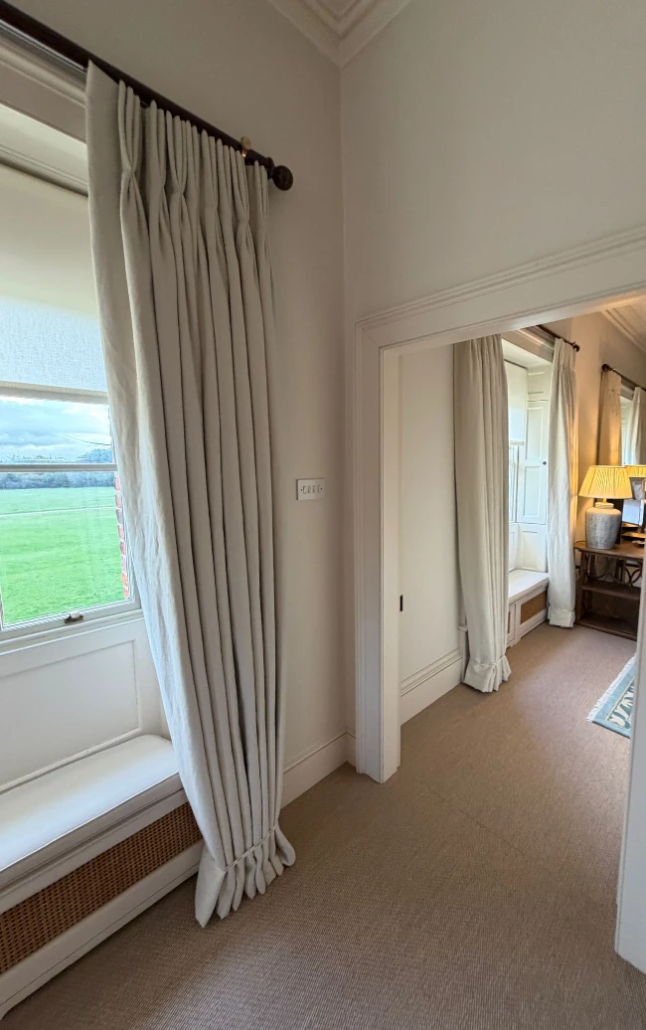
As well as restoring existing pieces, the team supplied and fitted over 90 new roller blinds. These would protect the restored curtains from future sun damage, extending their life for decades to come.

‘These were not ordinary roller blinds,’ Katherine explains. ‘We used Blind Fashion, a supplier who makes blinds for National Trust properties.’

The specifications went down to tiny details. The fabric had to look like linen but be robust enough for daily use. The shade had to be exactly right: nothing in a house like Serlby Hall is bright white. Sewn seams rather than heat-sealed edges. Decorative wooden acorns as pulls. Spring mechanisms strong enough for two-metre drops without pinging out of your hand.

‘When you are working in a setting like this, nothing can look like it does not belong,’ Katherine says.

Read more about choosing blinds for period properties in our guide to Blinds for Victorian and Edwardian Homes

Flexibility: when projects grow as trust builds

As the project progressed and trust built, Donna kept adding things.

First, new curtains for the top-floor bathrooms and bedrooms. The team sourced fabrics that would complement the restored pieces elsewhere.

Then chairs. Then sofas. We adapted two sofas to a more comfortable height; rather than buying new sofas, we raised the existing sofas’ height by modifying the cushions and legs. These were traditional, high-quality sofas from Howe in London and fitted the setting just perfectly, so it was lovely to be able to update these to work for our clients.

‘Donna got essentially refreshed sofas that still worked with the room but were now more comfortable,’ Katherine explains. ‘These were expensive pieces from Howe in London. It would have been a shame to replace them.’

Then kitchen chairs were recovered and repaired where they had become a bit wobbly over time. ‘Good projects often grow like this,’ Katherine reflects. ‘Once clients see that you are competent and nice to deal with, they start thinking about other things they have been putting off.’
Installation: Three Days Bringing Everything Back Together

The benefit of detailed planning: no surprises on fitting day

The team had started in September with a target of late November. Decorating work at the hall pushed that back slightly, but everything was ready for fitting in early December, in time for Christmas.

Tom led the installation over three days. Katherine sent Sarah to support him, getting everything into the right rooms and preparing each blind so Tom could work efficiently.
The detailed documentation from the planning meeting paid off. Every item went back exactly where it came from. The photographs and fitting notes meant nothing was left to memory or guesswork.

‘There were not really any surprises,’ Katherine says. ‘Because we had been so thorough at the start, the installation was just execution. Everything went where it was supposed to go.’

The Result: Curtains And Blinds Ready For Another 30 Years

Complete transparency on the final cost

‘We do not charge for meetings, advice or for the time spent sourcing fabrics,’ Katherine adds. ‘That is part of our service. But every physical element was documented. Donna could see exactly what she was paying for throughout.’

What made this curtain restoration project work

Looking back, Katherine reflects on the ingredients that made the project successful.
‘I think it comes down to trust and communication,’ she says. ‘Donna trusted us because her daughter had worked with us. We built on that trust through documentation, transparency, and constant updates. She always knew where things stood.’

Craftsmanship that stands the test of time

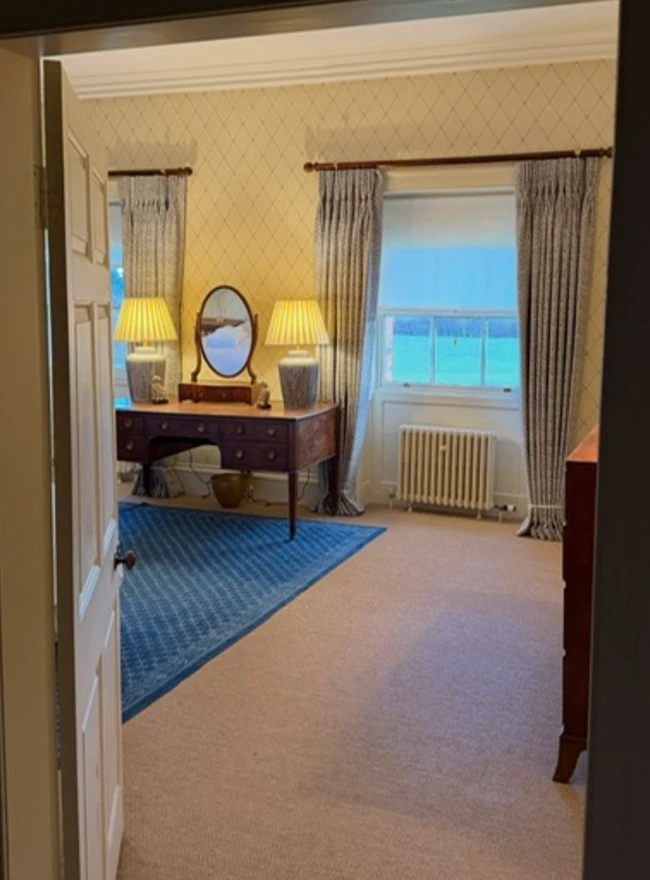
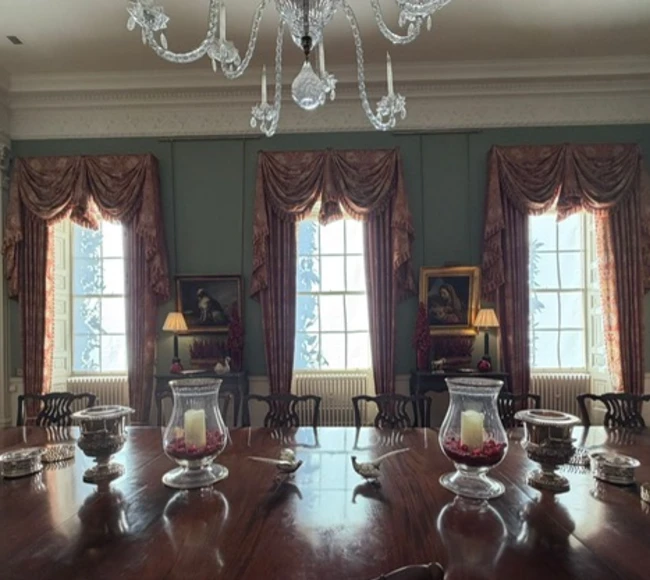
The curtains that Donna designed 30 years ago are now ready for another three decades. The linings are fresh, the repairs invisible, the new blinds protecting everything from future sun damage.

It is important to stress this isn’t the norm, often it is right and best to start again but in this case the traditional fabrics and craftsmanship had stood the test of time, unlike other interior design trends designs like this never date.

‘In 30 years, someone might restore these curtains again. And I hope they will look at our linings and our work and say, these were beautifully done.’

What Our Curtain Restoration Client Says:

‘We could not be more pleased or more grateful to Katherine, Sara and the team. Katherine accepted our very challenging and sizeable project with a tight deadline and in the run up to Christmas celebrations (which we added more challenges to, along the way!). The team delivered on time and above and beyond our expectations, the quality of their work is exceptional. We cannot recommend them highly enough and we hope to recruit them again at the next opportunity. Katherine and her team are EXCELLENT.’ — D, Serlby Hall, North Nottinghamshire

Could Your Curtains and Blinds Benefit from Restoration?

If you have curtains or soft furnishings showing signs of age but still perfect for your home, restoration might be worth considering. Look for:

  • Faded leading edges where sunlight hits
  • Weakened or discoloured linings
  • Frayed trims or perished fabric at the edges
  • Curtains that still look right for the space but need refreshing

Get in touch via our website to arrange an initial conversation. We will listen to what you have, discuss what is possible, and give you an honest assessment of whether restoration is the right path for your situation.

For guidance on when to clean versus replace, see our Expert Guide to Curtain Cleaning

2026 Curtain Restoration FAQ

  • Is curtain restoration more expensive than replacement?

    It depends on the situation. You save on fabric costs because you keep the original fabric. The making costs are similar (sometimes even more) because the restoration work is comparable to creating new curtains and the existing curtains also have to be carefully unpicked! The other cost to factor is in the dry cleaning costs. Katherine’s team can advise on the best approach for your specific pieces.

  • How do I know if my curtains are worth restoring?

    Ask what would be lost if you replaced them. If your curtains match wallpapers, coordinate with room schemes, or feature craftsmanship that would be difficult to replicate, restoration is worth exploring.

  • Can you work on curtain and blind projects outside London?

    Yes. Serlby Hall is in Doncaster. Katherine’s team works across the UK for the right projects.

  • What if some items cannot be saved?

    Katherine will tell you honestly. At Serlby Hall, new curtains were made for the top floor where that was the right solution, designed to complement the restored pieces elsewhere.

Get the look


About The Author

Katherine Brown began her career project managing major house renovations, giving her a rare mix of creative design ability and deep technical understanding of construction, hardware, motorisation and installation. For the last decade, Katherine and her team have delivered bespoke window dressings and soft furnishings for homes across London and the UK, including large heritage properties, complex architectural spaces and full-house projects where every room demands a tailored approach.

She works with some of the UK’s most respected interior designers as well as private homeowners and her work is recognised for its precision, considered detailing and a calm, collaborative design process rooted in trust and craftsmanship.

Katherine is particularly known for her thoughtful use of trims and layering, and for her belief that well-designed window dressings can quietly transform how a home feels—bringing clarity, comfort and a sense of ease to everyday living.