The 9 Curtain Heading Types Compared
Ok, let’s now make sure you can confidently discuss heading types.
What Is a Pencil Pleat Heading?
Pencil pleat curtains are made by sewing a tape with strings to the inside top of the curtain. These strings are pulled to gather the curtains to the desired width. This creates semi-cylindrical folds which look like a neat row of pencils – hence the name. Pencil pleat curtains can go on tracks or poles.
Katherine’s Key Takeaway
We get asked for pencil pleat an awful lot because that is the pleat everyone seems to be most familiar with, but there are a number of applications where they are just not suitable.
For medium-weight and lined curtains, this heading can simply result in too much bunching and bulk and can result in curtains that are difficult to stack back off the windows – hence that frustrating blocked view I mentioned earlier.
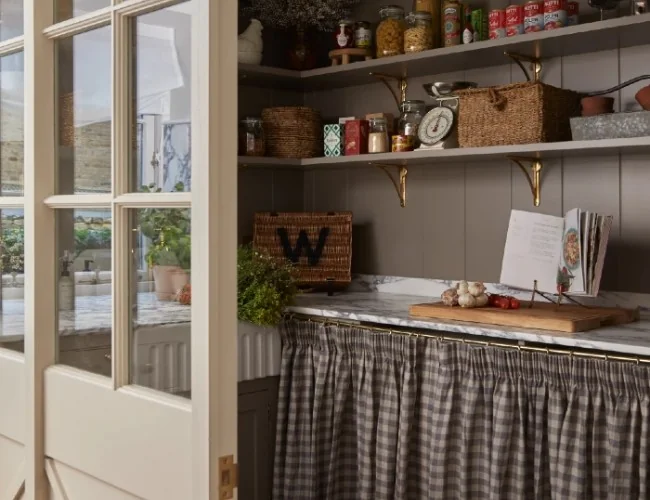
That said, there is one application where pencil pleats work very well: when we are creating small cafe curtains, typically for a pantry or small window. Here, the combination of a small curtain and light material makes pencil pleats a great option.
What Is a Cottage Heading?
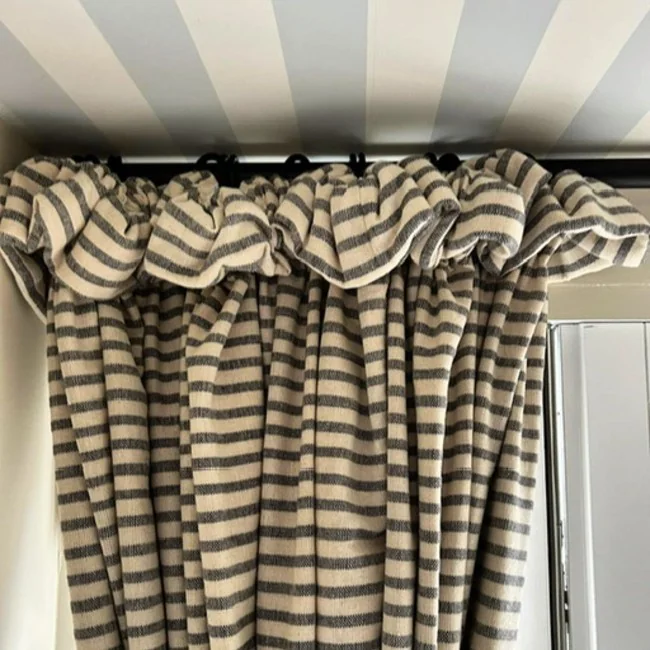
Cottage heading is otherwise known as a ‘gathered’ or ‘cottage’ pleat and gives a casual or informal look. It is a narrow pencil pleat heading tape which is used to gather the curtains to create a soft, gathered look. If you add an upstand with extra lining inside, this can give a stunning ruffle top heading, especially good if you are after a vintage look.
Katherine’s Key Takeaway
Cottage heading is a really fun feature that looks great where you want to make a statement, such as in a cottage or a kids’ bedroom.
What Is a Single Pinch Pleat?
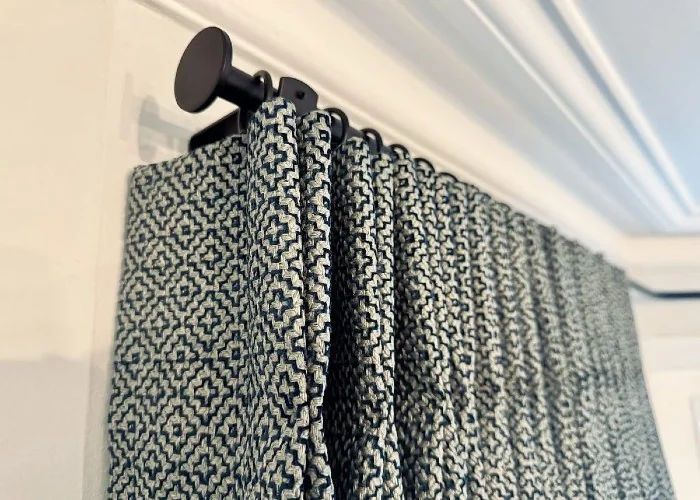
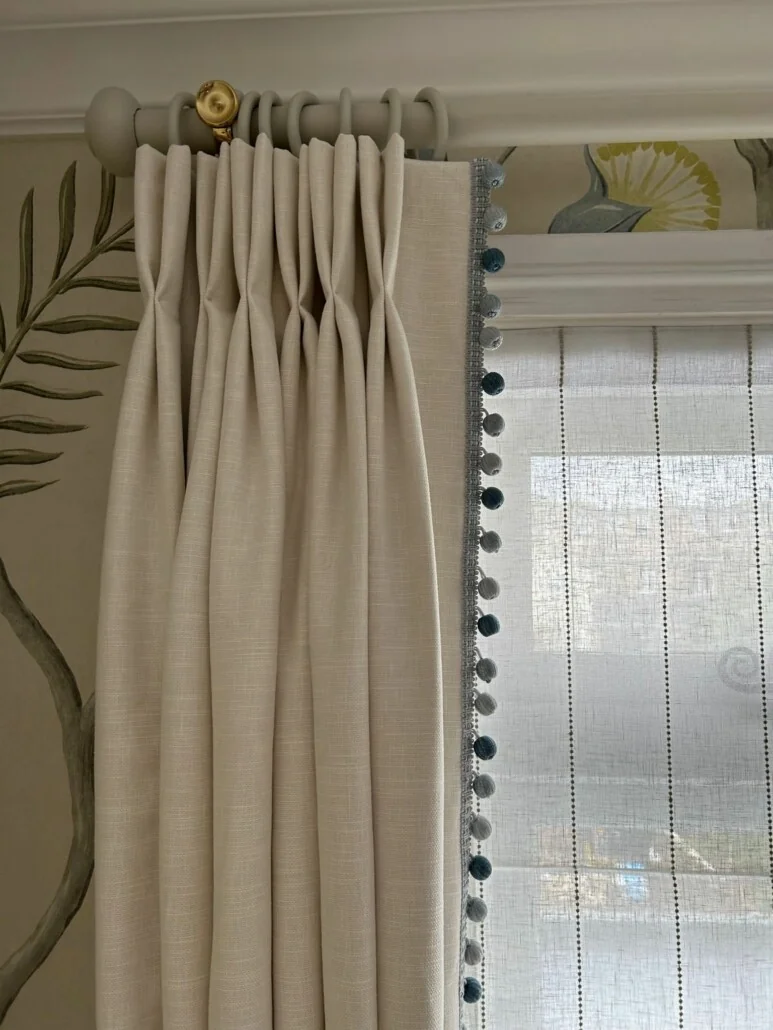
Single pinch pleat curtains are made by creating a single fold at the top of the curtain, which is evenly spaced along the curtain and separated by flat sections of fabric. This is a modern heading style which stacks really well and can be a very sensible choice for many applications.
Katherine’s Key Takeaway
A single pinch pleat is modern and space-efficient, but in my opinion, it can sometimes lack the stunning neatness and structure of a double pinch pleat.
Some people like a more relaxed look where the heading is a little less regimented. In this case, a single pinch pleat will work very well. It is also a good choice if you are on a budget, as it may require a little bit less fabric than other pleats.
In our experience, a single pinch pleat works better on a track or pole and less so when combining with a covered lathe, as the pleats can end up looking quite messy.
It also works better on wider windows than on smaller windows, where you may only get a few pleats.