Curtain Cost Factors
For curtains, the factors that affect the cost are: the heading type (pencil pleat, pinch pleat, wave), the lining (standard, blackout, thermal, interlining), the length of the curtains, fabric type and price per metre.
Curtain Heading Type
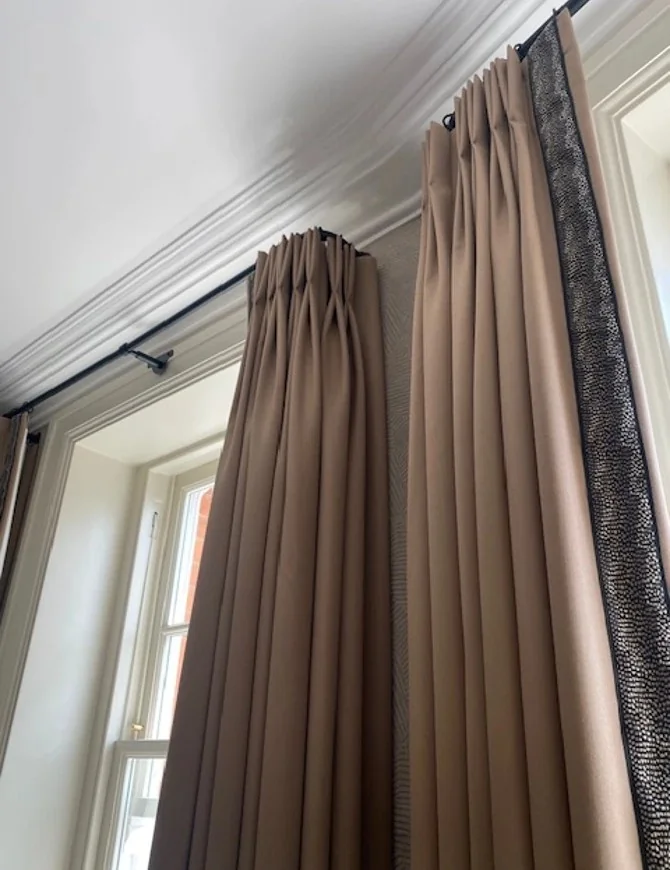
The heading you choose for your curtains will dictate the amount of fabric required – some heading types require more fabric than others. For example, wave curtains are one of the most fabric-hungry headings and require 2.2-2.4 times the fullness compared to a single pinch pleat, which requires just 1.8. Pencil pleats can also be 2-2.5 times the fullness, depending on the look you are trying to achieve.
A double pinch pleat (2 times the fullness) and a triple pinch pleat (2.5 times the fullness) will both need more fabric than a single pinch pleat.
Curtain-making costs are based on the number of fabric widths (standard width is 1.4m) needed to cover the window with fullness, so the heading type will not only impact the cost of fabric but also the cost of making.
If your heading choice were to take you into an additional width of fabric, it becomes a more significant decision than purely a matter of style.
Similarly, the width of your fabric will impact price, especially on delicate embroideries which are often less wide than the standard width of 1.4m – which may mean you need more fabric and making costs are increased.
Your heading type not only impacts fabric quantity and making costs, but can also impact the cost of your curtain hardware. For example, wave tracks and poles are more expensive than standard tracks and poles, which adds another cost factor.
Curtain Lining Type
Curtain linings are really important because they protect the fabric from fading, improve the drape of the curtains and have important benefits such as blackout and thermal insulation. While linings are a cost factor, we wouldn’t recommend compromising function to save money in this area. The lining will make the curtains last longer, and so saving money here can be a false economy in the long run.
If you are lining and interlining (adding a felt-like material for added luxury and warmth), then you will pay more for making as well as the additional materials for lining.
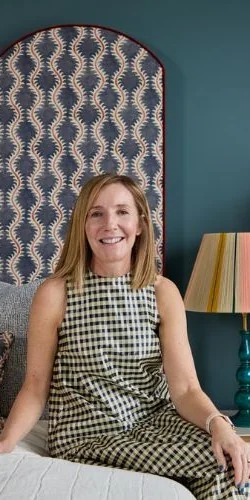
Katherine’s Key Takeaway – lining your curtains can be another way to add joy, such as with striped or coloured linings.
Unlined curtains can be a great option for privacy, sun filtering, softening a view and dressing/creating drama – where blackout and warmth aren’t required.